How to understand the Trump meme coin scandal and what a Senate grilling revealed about it
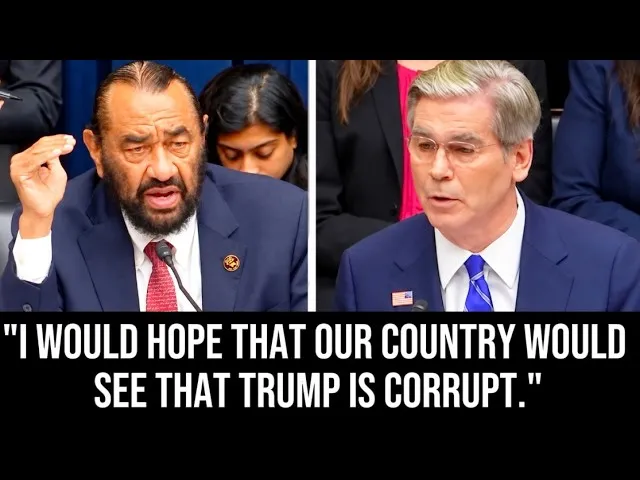
Video: WHOA: Al Green GRILLS Bessent over Trump's meme coin “scam”
You can order the same kind of articles for your own video to boost it on YouTube and Google. Just message the Telegram bot @sat_sit_bot. The bot writes and publishes the articles itself (with your YouTube video embedded) on popular topical websites (no ads). Try it free: 50 articles on us.
· based on the channel Daniel Reed
A meme coin is a cryptocurrency whose value rests almost entirely on hype, community attention and the willingness of the next buyer to pay more — not on revenue, assets or utility. The Trump meme coin became the test case for that definition when Senator Al Green pressed Treasury Secretary Scott Bessent over the token during a Senate hearing, calling it a scam and asking whether the sitting president should profit from a speculative asset. The exchange is the clearest public example yet of how Washington is trying to draw a line between ordinary crypto and tokens that look like a transfer of money from late buyers to early insiders.
What happened at the Senate hearing over the Trump meme coin
Senator Al Green used his questioning time to force Treasury Secretary Scott Bessent to address the president's token directly, and the result was a study in distance. Green framed the coin as a scam and pressed on the ethics of a sitting president issuing a speculative asset; Bessent repeatedly declined to own the project, saying it is not his area and that he has no involvement in it. The clip that circulated afterwards is short and repetitive, but the substance matters: the top financial official of the United States would not defend the token and would not explain its economics.
The episode fits a pattern. When a token carries a president's name, every regulator and cabinet official is asked about it, and the answers tend to be about jurisdiction rather than about investor protection. That silence is itself information for anyone holding or considering the asset.
How a meme coin actually creates and destroys value
A meme coin has no cash flow, no claim on any business and no built-in demand, so its price is a pure function of the next buyer's willingness to pay. That structure produces a predictable lifecycle:
- Insiders and early wallets accumulate supply cheaply, often before public trading opens.
- Public attention arrives, volume spikes, and price rises fast.
- Early holders sell into that liquidity while new buyers are still arriving.
- Price falls to whatever the remaining demand supports, and late buyers absorb the loss.
Nothing in that sequence requires fraud for people to lose money; it only requires that supply is concentrated and that the crowd arrives after the insiders. That is why experienced traders talk about exit liquidity rather than about fundamentals, and why tokens tied to a public figure attract both genuine supporters and people who simply want to sell to them.
The Trump token timeline and the numbers that matter
The Trump meme coin launched in January 2025, days before the inauguration, and quickly became one of the most talked-about tokens in the market. Two facts define the structure: a large share of supply was held by entities connected to the project, and the token's value depended on continued retail buying rather than on any product.
For anyone evaluating a similar launch, the checklist is concrete:
- Look up how much supply the top wallets control and whether those holdings are locked and for how long.
- Check whether the token gives insiders any advantage in timing, such as early access or vesting that expires before public attention peaks.
- Ask what, if anything, the token entitles the holder to. If the answer is nothing, the price is a sentiment gauge.
- Treat access-based selling — paying for proximity to a famous person — as a marketing cost, not an investment.
Why access and laundering accusations keep following political tokens
The recurring criticism of political meme coins is that buyers are not paying for a token so much as for access, attention or a discreet way to move money toward people close to power. That claim is hard to prove case by case, but the incentive structure is easy to see: a token with a famous name gives insiders a way to convert public enthusiasm into cash without issuing equity, filing a prospectus or answering to shareholders.
Regulators have struggled to respond because most meme coins are deliberately designed to sit outside securities frameworks. Bessent's refusal to engage during the hearing [mm:ss] illustrates the gap: the Treasury can speak about markets in general but has no clean mandate over a token that markets itself as a joke. The practical takeaway for traders is that political tokens combine speculative risk with reputational and legal risk that ordinary altcoins do not carry.
Typical questions traders ask before buying a meme coin
Most doubts about meme coins come down to a handful of practical questions, and they deserve direct answers rather than slogans. The first is whether the token has any mechanism that supports price other than new buyers; if not, position sizing matters more than conviction. The second is whether the team's wallets are visible and locked, because unlocked insider supply is the most common cause of sudden collapses.
The third is liquidity: thin order books mean a large sell can wipe out most of the value in minutes, and a token that trades heavily on one venue is fragile. The fourth is the exit plan. Buyers who cannot describe the conditions under which they would sell are not investing, they are hoping. Finally, ask what happens if attention disappears — for a token whose only asset is a name, a news cycle is the entire market.
How to judge risk when a famous name is attached to a token
When a token is tied to a politician or celebrity, treat the name as a marketing asset with a decay curve, not as a guarantee. Practical steps: size the position as money you can lose entirely, avoid leverage on illiquid tokens, verify contract and wallet data on-chain before buying, and assume that insiders know more about the launch schedule than you do. Watch how the person's representatives answer questions about the token — evasion is a signal about how the project will behave when things go wrong.
The Senate exchange is a useful case study because it shows the two standard responses to scrutiny: moral outrage from critics and jurisdictional retreat from officials. Neither protects buyers. Only supply data, liquidity data and an exit plan do.
What the hearing ultimately tells meme coin holders
The Senate hearing did not settle whether the Trump meme coin is a scam, but it established that senior officials will not defend it and will not explain it. For holders, that means the token's value depends entirely on sentiment and on the continued arrival of new buyers. Daniel Reed's breakdown of the exchange is worth watching for the tone as much as the content: the questions were blunt, the answers were not. Anyone trading meme coins should assume the same asymmetry — insiders sell into attention, and everyone else provides it.
Key takeaways
- Senator Al Green questioned Treasury Secretary Scott Bessent over the Trump meme coin and called it a scam during a Senate hearing.
- Bessent distanced himself from the token, saying he is not involved in the project and has no role in it.
- Meme coins carry no cash flow, no claim on assets and no built-in utility, so price depends only on the next buyer.
- The Trump token launched in January 2025, days before the inauguration, and drew criticism over access-selling and conflicts of interest.
- A widely shared complaint from traders: most meme coin buyers end up as the exit liquidity for early holders.
Source: WHOA: Al Green GRILLS Bessent over Trump's meme coin “scam” · Markdown version
Questions & answers
Is the Trump meme coin legally a scam?
No court or regulator has ruled it a scam, and the token was structured to fall outside most securities rules. Critics, including Senator Al Green, use the word because supply is concentrated among insiders and late buyers absorb the losses. Legally it remains a speculative asset, not an adjudicated fraud.
Why did Treasury Secretary Bessent refuse to discuss the token?
Bessent distanced himself from the project, saying he has no involvement in it and treating it as outside his remit. That is a jurisdictional answer rather than a defense of the token's economics. For traders, the practical read is that no senior official is willing to vouch for it.
What is the difference between a meme coin and a Ponzi scheme?
A Ponzi scheme promises returns and pays old investors with new money while concealing that there is no underlying business. A meme coin makes no return promise at all; it simply has no cash flow, so price depends on the next buyer. The outcome for late buyers can look similar, but the legal and structural categories differ.
How can I check whether a meme coin is dangerous before buying?
Check how much supply the top wallets hold and whether it is locked, review liquidity depth across venues, and confirm what the token entitles you to. If the answer is nothing and insider supply is unlocked, the token is a sentiment trade. Size any position as money you can lose completely.